Whitney Johnson, Founder & CEO of Disruption Advisors

Today, my guest is Whitney Johnson, Founder & CEO of Disruption Advisors, a tech-enabled talent development company. She was named a 2021 Top #10 Business Thinker by Thinkers50, and is a globally recognized thought-leader, keynote speaker, executive coach, and consultant.

A LinkedIn Top Voice since 2019 with 1.8 million followers, Whitney is the WSJ, USA Today and Amazon bestselling author of Smart Growth and Disrupt Yourself.
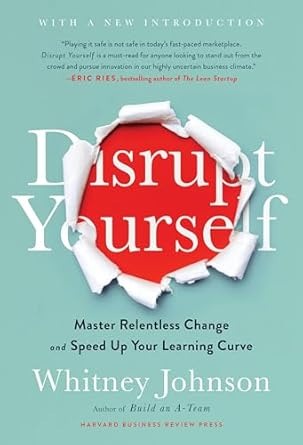
On her popular podcast Disrupt Yourself, ranked in the top .5% of listenership of all podcasts, she has interviewed world-renowned thinkers, including Brené Brown, Adam Grant, Susan Cain, and General Stanley McChrystal. Her major mentors and influences include renowned coach Marshall Goldsmith, the legendary human potential pioneer Bob Proctor, and the late Clayton Christensen, author of the seminal book The Innovator’s Dilemma, with whom she co-founded the Disruptive Innovation Fund. Whitney shares her passion for personal disruption, helping individuals transform their lives, careers, teams, and companies, through her keynote addresses, lectures at Harvard Business School’s Corporate Learning, and her LinkedIn Learning course Fundamentals of Entrepreneurship which has been viewed more than 1 million times.
In this candid conversation, Whitney shared the real stories behind her transition from Wall Street to executive coaching, how she applied a famous business theory to individual growth, and her own ongoing commitment to personal disruption.
1. From Products to People. Whitney revealed that her concept of “personal disruption” was born during her time as a Wall Street equity analyst. After reading Clayton Christensen’s famous book The Innovator’s Dilemma to understand the telecom market, she had a sudden “aha” moment when her boss rejected her request to try a new role. She realized that the theory of disruptive innovation didn’t just apply to products and companies like Netflix or Blockbuster; it could be directly applied to individuals who need to rewire their neural pathways and step into new versions of themselves.
2. The Price of Your New Self. Unlike traditional business disruption where a small startup takes down a massive incumbent, Whitney explains that in personal disruption, you are simultaneously both the disruptor and the incumbent. Because you are actively choosing to leave your current state to embark on a deliberate process of self-innovation, she notes that the necessary “price of your new and better self is your old self,” which can be a deeply uncomfortable and painful process of growth.
3. Navigating the S-Curve. To help teams execute complex strategies, Whitney doesn’t just assess their goals; she maps where each individual currently sits on the “S-curve of learning”. By understanding whether an employee is awkwardly struggling at the “base camp” of a new skill or cruising with high-level expertise, leaders can better predict their team’s emotional states and behaviors. She finds that while young people frequently build the muscle for disruption by constantly moving to new schools or jobs, older professionals actually have a massive advantage: they possess the necessary wisdom to make meaning of their disruptions, provided they actively choose to lean into the discomfort.
4. Practicing What You Preach. To ensure she maintains absolute integrity with the executives she coaches, Whitney actively forces herself to do new, terrifying things just to keep her own disruption skills sharp. Whether she is obsessively taking surfing lessons in Costa Rica until she can stand up on the board, or terrifying herself by going rappelling alongside her Executive MBA students, she constantly practices being a beginner.
