
Tom Goodwin, Innovation Leader and Author

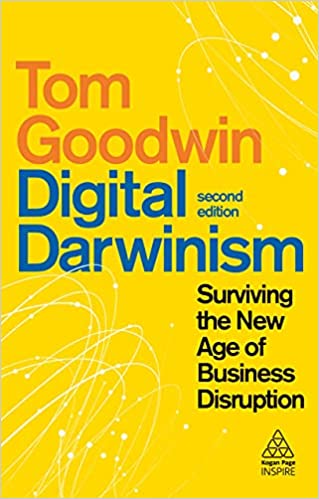
Today, my guest is Tom Goodwin, Co-Founder of All We Have is Now, the author of Digital Darwinism: Survival of the Fittest in the Age of Business Disruption and host of the Euronews business television show The Edge.
As a speaker, Tom has delivered keynotes at hundreds of events and conferences in the U.S. and around the world. As a writer and columnist, his work has been published in TechCrunch, Forbes, Adweek, Marketing Week, The Drum, Inc., Digiday, Quartz, and The Guardian. He has been quoted in the Economist and The New York Times and appeared on CNBC. Previously, Tom served as head of futures and insight for Publicis Group, led innovation for Zenith, Havas, and IPG Media Lab, and worked at advertising agencies including Lowe and TBWA Worldwide, among other roles held over the past 20+ years.
In this candid conversation, Tom shared the real stories behind his pragmatic approach to technology, the irrationality of human buying behavior, and why data can’t predict true innovation.
1. Pragmatic Futurism. Tom expressed deep frustration with the typical “futurist” desire to be overly theatrical and freak people out with talk of dystopian futures, artificial general intelligence, and self-flying cars. Instead, he advocates for a much more grounded approach, focusing on what technology actually means for normal people right now. To spark meaningful innovation, he simply asks companies to imagine what their business would look like—and how it would make money—if they were to build it completely from scratch today, knowing everything they now know about modern technology and consumer behavior.
2. The Peculiarity of People. Drawing heavily from his early teenage job selling vacuum cleaners and his extensive career in advertising, Tom realized that people often make completely irrational buying decisions, even if they later explain them in highly rational ways. He argues that companies desperately need to lean into these human quirks by designing tiny, thoughtful moments of delight into their customer experiences. For example, he wishes Apple Pay had a more interesting confirmation tone, and he believes that unboxing a package or picking up a rental car should feel like an exciting event rather than a frustrating administrative chore.
3. The Problem with Business Cases. Tom highlighted that the hardest part of true innovation isn’t coming up with great ideas; it’s trying to force those unprecedented concepts into traditional corporate structures that demand robust, mathematically proven “business cases” based on past data. He pointed out that it would have been impossible to present historical data to justify the creation of Airbnb, or the first $600 Dyson vacuum cleaner, because there was no existing market to analyze. Because truly original ideas lack existing numbers, he notes that innovators must often rely on ego, sales skills, and sheer passion to completely challenge established conventions.
4. The AI Reality Check. Despite the massive hype surrounding artificial intelligence and tools like ChatGPT, Tom remains cautiously skeptical, noting that AI mostly provides an “illusion of intelligence” by simply creating likely combinations of words. When analyzing how AI will impact jobs, he notes that a lawyer’s actual daily work is primarily winning business, building relationships, and creatively arguing cases—not merely drafting contracts that a machine could write. He believes AI will initially just lubricate a few niche, mundane tasks, and that true, profound industry change will only happen when entirely new companies are built from the ground up with algorithms operating at their absolute core.
