
Simon Sinek, Author of “Start With Why” and TED Speaker
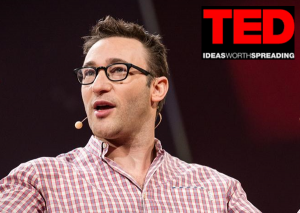
Today, my guest is Simon Sinek, an author, speaker, and consultant who writes on leadership and management.
He is best known for his brilliant and ground breaking TED Talk entitled "How Great Leaders Inspire Action," which explains why we are inspired by some people, leaders, messages and organizations over others and is the 3rd most viewed video on TED.
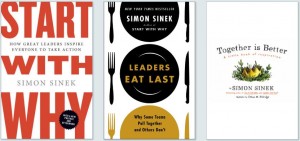
Since then, he has written 3 books: Start With Why: How Great Leaders Inspire Everyone to Take Action (2009), Leaders Eat Last: Why Some Teams Pull Together and Others Don't (2014) and Together is Better: A Little Book of Inspiration (2016).
In this candid conversation, Simon shared the real stories behind the painful origins of his famous "Why" concept, his semi-autobiographical writing process, and his ultimate vision for the modern workplace.
1. The Painful Origins of "Why". Simon revealed that his massive success didn't come from a sudden flash of academic brilliance, but rather from a dark period of personal pain. Despite running a successful small business and making a decent living, he completely lost his passion for his work and spent all his energy pretending to be happy and in control. After a close friend expressed concern, he actively sought a solution and discovered a naturally occurring biological pattern—involving the limbic brain and neocortex—that explained human motivation. He initially spread this profound discovery incredibly organically, literally standing in people's living rooms and helping their friends find their "why" for $100.
2. The Semi-Autobiographical Writer. Describing himself as having the insatiable curiosity of a little kid, Simon explained that all of his work is actually semi-autobiographical. He doesn't research theoretical academic questions; instead, he writes to solve his own personal struggles. For instance, his book Leaders Eat Last was born out of his struggle to understand why military personnel implicitly trusted each other with their lives, while private sector workers were deeply selfish and wouldn't even share credit for a project. He simply mentioned his fascination with this topic to his publisher during a social dinner, who immediately offered to publish it.
3. The Idealist in a Realistic World. Simon relies heavily on a close circle of friends and mentors, like Seth Godin, who constantly push him and pick his grandiose ideas to pieces. Currently, he is exploring a new personal struggle: figuring out how to survive as a naive idealist who has to function in reality. He is fascinated by the tension of having a grand, long-term vision while living in a realistic world that doesn't care about those ideals and is primarily focused on short-term gains and making a quick buck.
4. An Agnostic Approach to Inspiration. Comparing his projects to the movies of director Baz Luhrmann, Simon sees his books as children that he raises and eventually releases into the world to live their own lives. He insists he actually hates the process of writing books and is completely agnostic about his medium. His ultimate goal is not to be an author or speaker, but simply to find the best way to spread his overarching vision: a future where the vast majority of people wake up inspired to go to work, feel safe while they are there, and return home fulfilled at the end of the day.
