
Robert Waldinger, MD, Author of “The Good Life”

Today, my guest is Robert Waldinger MD, a psychiatrist, psychoanalyst and Zen priest. He is a Clinical Professor of Psychiatry at Harvard Medical School, Director of the Center for Psychodynamic Therapy and Research at Massachusetts General Hospital, and Director of the Harvard Study of Adult Development, the longest scientific study of happiness ever conducted. Robert’s work was prominently featured on CBS Sunday Morning.
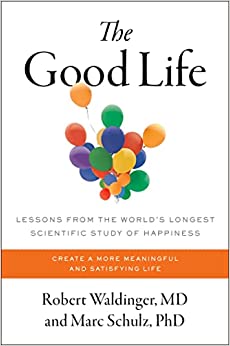
Robert is now expanding the Study to the next generation and how childhood experience reaches across decades to affect health and well-being in middle age. From this study, Bob has authored The Good Life: Lessons from the World’s Longest Scientific Study of Happiness, which examines the central role of relationships in shaping a person’s health and well-being. His TEDx talk on this subject has received nearly 44 million views. Robert received his A.B. from Harvard College and his M.D. from Harvard Medical School.
In this candid conversation, Robert shared the real stories behind directing the world’s longest-running study on human development, the surprising physical impacts of our relationships, and his deeply personal Zen practice.
1. Inheriting an 80-Year-Old Study. Robert revealed how he became the fourth director of a groundbreaking human thriving study that started in 1938, originally tracking two completely different groups: privileged Harvard sophomores and boys from Boston’s poorest, most troubled neighborhoods. After taking over the project 20 years ago, Robert actively modernized the research by introducing cutting-edge techniques like DNA blood draws, MRI scans, and stress-recovery tests to deeply analyze how these individuals develop and thrive over a lifetime.
2. The Health Secret of Relationships. Initially surprising to Robert as a medically trained physician, the study’s data definitively proved that good relationships do more than just make us happy—they literally protect our physical health. By helping us calm down and quickly recover from “fight or flight” mode, strong social connections lower stress hormones and reduce inflammation, whereas chronic loneliness acts as a continuous physical stressor that slowly wears down the body’s systems.
3. Cultivating Compassion Through Zen. In addition to his academic research and clinical work as a psychoanalyst, Robert is a Zen priest who has meditated daily for almost 20 years. He explained that watching the uncomfortable “messiness” of his own mind and emotions during meditation naturally cultivates a deep compassion for others. By acknowledging his own difficult feelings, he easily recognizes that everyone else is struggling with the exact same human challenges, helping him to be far more forgiving when people act out.
4. Taking His Own Medicine. Acknowledging the intense pressure to work 24/7 as a Harvard professor, Robert admitted he used to dedicate all his time to endlessly climbing the academic ladder. However, after witnessing the study’s undeniable proof of what actually creates a “good life,” he deliberately changed his own habits. Today, he actively “takes his own medicine,” choosing to spend his free time taking walks and sharing dinners with friends rather than working his entire life away.
