
Rory Sutherland, Vice Chairman, Ogilvy UK

Today, my guest is Rory Sutherland, Vice Chairman of Ogilvy UK, who works with a consulting practice of psychology graduates who look for ‘unseen opportunities’ in consumer behaviour – these are the often small contextual changes which can have enormous effects on the decisions people make. Before founding Ogilvy Change, Rory was a copywriter and creative director at Ogilvy for over 20 years, having joined as a graduate trainee in 1988.
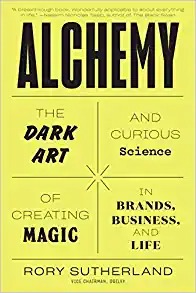
Rory has variously been President of the IPA, Chair of the Judges for the Direct Jury at Cannes, and has spoken at TED Global. He writes regular columns for the Spectator, Market Leader and Impact, and also occasional pieces for Wired. He is the author of two books: The Wiki Man, and the best-seller Alchemy, The Surprising Power of Ideas which don’t make Sense, published in the UK and US in May 2019. Rory is married to a vicar and has twin daughters of 19. He lives in the former home of Napoleon III – unfortunately in the attic. He is a trustee of the Benjamin Franklin House in London and a Patron of Rochester Cathedral.
In this candid conversation, Rory shared the real stories behind his entry into advertising, his championing of behavioral science over standard economics, and why the ultimate success of great products often relies entirely on unseen marketing innovations.
1. The Galapagos of Human Behavior. Rory revealed that he pursued advertising after a teenage psychometric test accurately suggested he become either a lawyer or an ad copywriter. He honed his skills in direct marketing, which he refers to as the “Galapagos Islands” of understanding human behavior because it allowed for massive, fully funded testing of human quirks. For example, when selling British Telecom services, he discovered that offering customers the choice of both a phone and postal response significantly increased overall sales compared to offering just one option—a bizarre behavioral reality that standard economists would never predict.
2. The Illusion of Rationality. Pushing back against traditional economic models, Rory explained that people buy things for two reasons: a good reason and the real reason. Consumers fundamentally make emotional purchasing decisions—such as spending exorbitant amounts on wine to mark an occasion or show generosity—but they desperately need a logical, post-rationalized “excuse” to explain the purchase to their friends or spouses. For example, he notes that environmental sustainability is usually a weak primary selling point, but it works brilliantly as a supporting rational excuse for someone who actually just wants to buy a ridiculously fast Tesla.
3. Rational Chic and Exclusive Value. Rory demonstrated how behavioral science frequently uncovers incredibly lucrative, counter-intuitive strategies. He previously advised a major supermarket to hide its discounts behind a loyalty card simply because a financial discount feels far more valuable when it is perceived as exclusive to a specific group rather than universally available to everyone. Conversely, he noted that budget airlines like Southwest or EasyJet expertly destigmatized low prices by creating “rational chic”. By loudly taking away basic perks like free meals or checked baggage, they successfully gave consumers a rational excuse to feel highly intelligent for saving money rather than just feeling cheap.
4. The Unseen Power of Marketing. Lamenting that brilliant marketing is often falsely misattributed by the public to simply having a “great product,” Rory operates under the philosophy that “the future’s already here, we just don’t know how to sell it”. He argued that Netflix’s ultimate breakthrough wasn’t merely putting DVDs in the mail, but rather a marketing innovation that shifted the pricing model to a flat monthly fee with zero late fees. Similarly, Zoom conquered the video conferencing market by smartly using an impersonal “meeting room” link rather than the psychologically awkward and intrusive “phone call” model of its competitors. Today, he eagerly waits for someone to apply this same level of packaging and marketing genius to finally make residential solar panels appealing and straightforward for average consumers to buy.
