Robert Cialdini, Author of “Influence” and “Pre-Suasion”
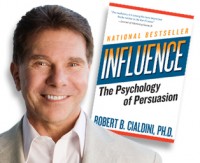
Today, my guest is Dr. Robert Cialdini, a renowned speaker and author of the iconic book "Influence: the Psychology of Persuasion" and President & CEO of Influence at Work, which focuses on ethical influence training.
His book Influence has sold over 3 million copies, is a New York Times Bestseller and has been published in over 30 languages.
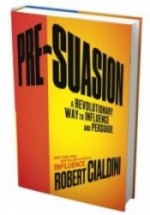
Charlie Munger has said "Robert Cialdini has had a greater impact on my thinking on this topic [Influence] than any other scientist..." His latest book, Pre-Suasion: A Revolutionary Way to Influence and Persuade, has already become a Wall Street Journal and a New York Times Bestseller.
In this candid conversation, Robert shared the real stories behind his undercover research into persuasion, the rising dominance of social proof, and the fascinating psychological concept of "pre-suasion."
1. The Undercover "Sucker". Robert revealed that his iconic research into influence actually began because he had spent his life being a "sucker" who consistently fell for sales pitches and fundraising appeals. Feeling that academic laboratory research only provided partial answers to human behavior, he went incognito to infiltrate the corporate training programs of successful salespeople, recruiters, and marketers, ultimately discovering six universal principles they all systematically used to get people to say "yes".
2. The Rise of Social Proof. While Robert maintains that there is no single "most effective" influence tactic because the right approach always depends on the situation, he noted that the principle of social proof has become incredibly dominant due to the internet. Because 98% of online purchasers now check customer reviews before buying, people constantly rely on the beta-tested experiences of others. He cited a study where a Beijing restaurant simply put stars next to its most popular menu items, causing each dish's popularity to immediately jump by 13 to 20 percent.
3. The Magic of Pre-Suasion. Discussing his newer concept of "pre-suasion," Robert explained that while influence focuses on what goes into a message, pre-suasion is about how you attune people in the moment before the message is delivered. He shared a fascinating experiment where an online furniture store changed its background wallpaper to either fluffy clouds or pennies; visitors who saw the clouds instinctively prioritized comfort and bought more expensive sofas, while those who saw the pennies prioritized cost, with neither group realizing the imagery had completely shaped their internal preferences.
4. A Mid-Career Cognitive Shift. To write his book on pre-suasion, Robert admitted he had to undertake a difficult mid-career shift. Because his original work on influence was deeply rooted in social psychology, he had to fundamentally retrain himself in cognitive psychology to understand exactly how visual cues and imagery alter a person's consciousness and focus. Reflecting on his overall career, he jokingly noted that while he genuinely enjoys the act of public speaking more than the difficult process of writing, he vastly prefers the ultimate reward of "having written".
