Paul Saffo, Forecaster and Futurist
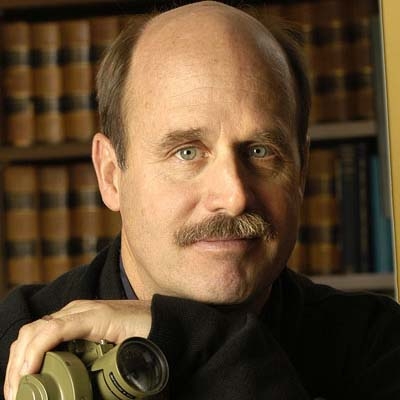
Today, my guest is Paul Saffo, a Forecaster and Futurist with over three decades experience exploring the dynamics of large-scale, long-term change. He teaches forecasting at Stanford University and advises organizations worldwide. Paul is also a non-resident Senior Fellow at the Atlantic Council and a Fellow of the Royal Swedish Academy of Engineering Sciences.

Paul serves on a variety of not-for-profit boards including the Long Now Foundation, and the Millennium Project.
Paul’s essays have appeared in a wide range of publications including The Harvard Business Review, Fortune, Foreign Policy, Wired, The Los Angeles Times, Newsweek, The New York Times, and the Washington Post. Paul holds degrees from Harvard College, Cambridge University and Stanford University.
In this candid conversation, Paul shared the real stories behind his work as a forecaster, the creation of a 10,000-year clock, and why long-term thinking isn’t always intrinsically good.
1. The Futurist with a Past. Paul explained that he actually prefers the term “forecaster,” grounding his work in deeply understanding exponential phenomena like Moore’s law to figure out the larger implications for society and geopolitics. He noted that the modern field of forecasting really began in the 1950s with the Rand Corporation and figures like Herman Kahn. Having been in the business since the 1980s—when all the world’s prominent futurists could easily fit around a single table at a local Chinese restaurant—he jokingly refers to himself as a “futurist with a past”.
2. The Shrinking Future. Paul discussed his 25-year tenure on the board of the Long Now Foundation, which was originally inspired by an observation from computer scientist Danny Hillis. Hillis noticed that as he grew up, the concept of the “future” was always perfectly synonymous with the year 2000, meaning society’s vision of the future was actually shrinking by one year every single year he was alive. To combat this short-term thinking, they embarked on a project to build a massive, 10,000-year mechanical clock inside a Texas mountain—funded by Jeff Bezos—that ticks only once a year and features a cuckoo that comes out once a millennium. Paul likes the 10,000-year time frame because it perfectly bridges human-scale history, dating back to the dawn of agriculture, with geological time.
3. The Time Capsule Fallacy. Reflecting on how to communicate across millennia, Paul stated that physical time capsules are a “singularly dippy” and utterly useless idea. He noted they are often lost during ceremonial diggings and ultimately provide more value to archaeologists by revealing the quirks of the past rather than actually aiding the future. Instead, he argues the absolute best way to send a message across deep time is through oral history and active storytelling, much like Homer’s Odyssey. He even cited a 1980s task force on warning future generations about nuclear waste dumps, which concluded that the most effective long-term warning system wouldn’t be physical signs, but rather starting a new religion.
4. The Danger of Long-Term Thinking. Pushing back against common wisdom, Paul argued that long-term thinking is not an intrinsically good moral virtue, but rather a highly powerful tool that can be used for both good and ill. He coined the phrase “he or she who thinks the longest wins,” noting that highly organized, long-term thinking can often lead to results that the general public might strongly dislike, such as the strategic composition of the modern Supreme Court. Ultimately, he reminds people to “never mistake a clear view for a short distance,” warning that while technological changes might seem incredibly obvious on the horizon, they usually take forever to arrive—before suddenly happening all at once.
