Matt Abrahams, Author of “Think Faster, Talk Smarter”

Today, my guest is Matt Abrahams, Author of Think Faster, Talk Smarter and a leading expert in communication with decades of experience as an educator, author, podcast host, and coach. As a Lecturer in Organizational Behavior at Stanford University’s Graduate School of Business, Matt teaches popular classes in strategic communication and effective virtual presenting. He received Stanford GSB’s Alumni Teaching Award in recognition of his teaching students around the world.
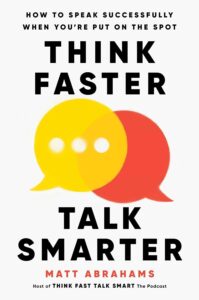
When he isn’t teaching, Matt is a sought-after keynote speaker and communication consultant. He has helped countless presenters improve and hone their communication, including some who have delivered IPO road shows as well as TED, World Economic Forum, and Nobel Prize presentations. His online talks garner millions of views and he hosts the popular, award-winning podcast Think Fast, Talk Smart The Podcast. His previous book Speaking Up without Freaking Out: 50 Techniques for Confident and Compelling Presenting has helped thousands of people manage speaking anxiety and present more confidently and authentically.
In this candid conversation, Matt shared the real stories behind his expertise in spontaneous speaking, actionable techniques for managing performance anxiety, and the strategic power of everyday communication.
1. The Alphabetical Advantage. Matt revealed that his expertise in “spontaneous speaking” was actually born out of childhood necessity. Because his last name begins with “A-B,” his teachers constantly called on him first when going alphabetically down the roster. This early exposure to being repeatedly put on the spot laid the foundation for his Stanford teaching career, where he was eventually asked to help brilliant business students who were experiencing crippling anxiety during intense academic cold calls.
2. The Anxiety Management Plan. To combat the fight-or-flight response of public speaking, Matt advocates for actively tackling both the physical symptoms and the mental sources of anxiety. He shared his own personal three-step routine for nervous moments: he holds a cold object to lower his core temperature and prevent blushing, he verbally reminds himself that he is there in service to his audience rather than trying to be perfect, and he secretly recites tongue twisters to warm up his voice and force his brain entirely into the present moment.
3. The White Flag of Small Talk. Matt noted that many people hate small talk because they put immense pressure on themselves to be “interesting,” when the actual goal should simply be to be “interested” in the other person. He also shared a brilliant “White Flag technique” for gracefully escaping awkward conversations. Rather than making a fake excuse to go to the bathroom, you simply signal your departure ahead of time by stating you plan to go mingle, but ask one final, genuine question before taking that “last lap”.
4. The Strategy of Ambiguity. Surprisingly, Matt originally studied flirtation in graduate school because he was deeply fascinated by how humans use ambiguity strategically. While most communication training focuses strictly on absolute clarity, he noted that everyday social interactions—such as politely telling a terrible cook that you’ve “never quite tasted anything like this before”—rely heavily on intentional vagueness to navigate tricky situations. Ultimately, his overarching mission with his teaching is to empower everyone to comfortably share their voice, firmly believing the world is inherently better when all perspectives can be clearly heard.
