
Katy Milkman, Author of “How to Change”

Today, my guest is Katy Milkman, the James G. Dinan Professor at The Wharton School of the University of Pennsylvania, host of Charles Schwab’s popular behavioral economics podcast Choiceology, and the former president of the international Society for Judgment and Decision Making. She is also the co-founder and co-director of the Behavior Change for Good Initiative, a research center with the mission of advancing the science of lasting behavior change.
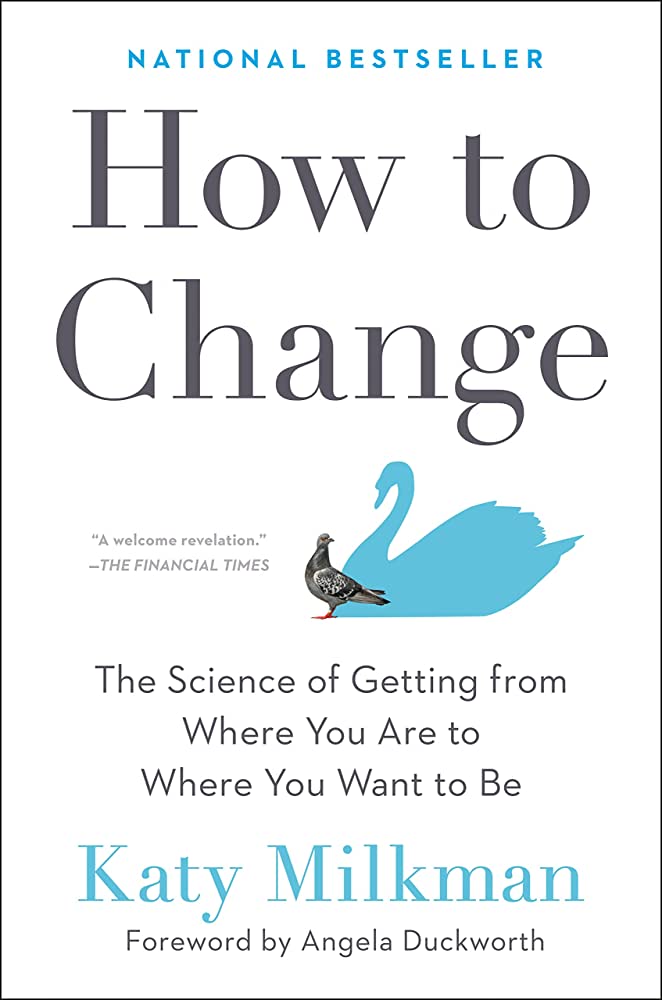
Over the course of her career, Katy has worked with or advised dozens of organizations on how to spur positive change, including Google, the U.S. Department of Defense, the American Red Cross, 24 Hour Fitness, Walmart and Morningstar. Her bestselling book How to Change: The Science of Getting From Where You Are to Where You Want to Be was named one of the eight best books for healthy living in 2021 by the New York Times, and Katy was also named one the world’s top 50 Management thinkers by Thinkers50 in 2021. Katy earned her undergraduate degree from Princeton University and her PhD from Harvard University.
In this candid conversation, Katy shared the real stories behind her unique path to behavioral economics, her invention of temptation bundling, and the surprising science of building lasting habits.
1. The Highbrow Netflix Reversal. Katy revealed that her fascination with behavioral economics and human irrationality was vividly captured in her PhD dissertation, which analyzed early DVD delivery data from an Australian Netflix copycat. She discovered that people systematically procrastinate on things that are “good” for them; while users enthusiastically ordered highbrow documentaries, they would often keep them for a long time and instead immediately watch the lowbrow action flicks that arrived in the mail, perfectly demonstrating human impatience and our tendency to flip our preferences based on present bias.
2. Fun Beats Efficiency. When diagnosing why people fail to reach their goals, Katy noted that most people mistakenly look for the most direct, efficient path—like using a miserable stairmaster to burn maximum calories. However, research shows that “fun beats efficiency,” because people will actually persist much longer if they enjoy the process, like taking a Zumba class with friends. To solve the challenge of instant gratification, she researched “temptation bundling,” a highly effective technique where you strictly pair a chore with a guilty pleasure, such as only allowing yourself to binge-watch a favorite TV show while actively working out at the gym.
3. The Enemy of Habit is Rigidity. During a massive habit-building experiment with Google employees, Katy and her team were shocked to discover that strictly practicing a new behavior at the exact same time every day is actually less effective than being slightly variable. They learned that people who were highly rigid would completely fall apart and abandon their habit if they missed their exact “magic window”. In contrast, people who practiced with more flexibility naturally developed a robust “Plan B,” allowing them to consistently maintain their habits even when unexpected disruptions, like a morning traffic jam, got in the way.
4. The 40 Percent Revelation. Katy’s ultimate decision to dedicate her entire career to studying behavioral change happened unexpectedly during a medical seminar. She was completely blown away by a graph revealing that a staggering 40 percent of premature deaths in the U.S. are simply the result of daily behavioral decisions, such as choosing what to eat, whether to exercise, or remembering to buckle a seatbelt. Realizing that these small daily choices have a massive, life-or-death impact—and that similar behavioral patterns apply to financial savings and education—she shifted all of her research focus toward helping people make positive, lasting changes.
