
Jeff Karp, Author of “Life Ignition Tools”

Today, my guest is Jeff Karp, PhD., Founder of KarpLab, the Distinguished Chair at Brigham and Women’s Hospital and Professor at Harvard Medical School and MIT in Boston; and author of Life Ignition Tools. He was elected a fellow of the National Academy of Inventors, Royal Society of Chemistry, American Institute for Medical and Biological Engineering’s College of Fellows, Biomedical Engineering Society (BMES), and the Canadian Academy of Engineering.
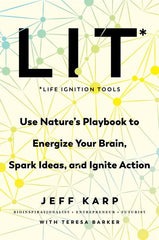
Growing up in rural Canada he was written off by his school because of his learning differences. As a result, Jeff evolved a process for embracing life, embodied by Life Ignition Tools, through years of iteration and tinkering to make his unique patterns of thought and behavior work for him. These LIT tools have been thoroughly road-tested, through Dr. Karp’s life, in his lab, and by his many mentees.

Jeff specializes in bioinspired medical problem-solving and runs a research laboratory dedicated to the process of medical innovation that harnesses lessons from nature for inspiration. As a bioengineer, Jeff is at the forefront of taking inspiration from the most successful researchers of all time—evolution and nature—to find ways to improve our daily life, health, focus and productive purpose. His lab’s technologies have led to the formation of thirteen companies. The technologies they have developed include a tissue glue that can seal holes inside a beating heart; targeted therapy for osteoarthritis, Crohn’s disease, and brain disorders; “smart needles” that automatically stop when they reach their target; a nasal spray that neutralizes pathogens; and immunotherapy approaches to annihilate cancer.
In this candid conversation, Jeff shared the real stories behind his childhood struggles with severe ADHD, the unconventional mindfulness tools he developed to survive, and how he uses nature’s secrets to solve complex medical problems.
1. The Accidental ADHD Book. Jeff revealed that his book, Life Ignition Tools (LIT), originally started as a pitch from a New York literary agent who wanted him to write about “bio-inspiration”—his lab’s practice of turning to nature to solve complex medical problems. However, taking time to reflect, Jeff realized he had a much deeper, burning desire to write about his lifelong struggles with undiagnosed ADHD and learning differences. Instead of a traditional science book, he shifted the focus to share the deeply personal survival strategies and tools he originally developed in elementary school just to navigate the world, which he now successfully uses to run his diverse Harvard medical lab.
2. The Bat and the Brain Pinch. Growing up on a rural farm, Jeff constantly felt frustrated and alienated by his inability to focus and learn like other kids. One day, while walking down his thousand-foot driveway, he came face-to-face with a bat; he was so surprised that his intense focus completely squeezed all of his anxious, ruminating thoughts out of his mind. This led to a massive epiphany: he realized he could intentionally replicate this effect by deliberately hyper-focusing on the tiny details of everyday objects—like examining the texture and writing on a simple pencil. By utilizing this technique, which he calls “pinching the brain,” he successfully trained his attention span, squeezing out distractions and gaining the confidence to focus for much longer periods of time.
3. The North Star of Inquiry. Jeff explained that a childhood tutor profoundly changed his life simply by asking him how he thought about an answer, which ultimately taught him to “think about thinking” and made questioning his ultimate survival tool. Today, he heavily applies this to his laboratory by actively refusing to settle for typical, incremental scientific research. Instead, he forces his team to identify the absolute highest-value questions by constantly asking, “What’s the bar that we need to exceed to get everybody excited?”. By setting this massive “North Star” goal, he ensures his lab consistently produces major breakthroughs that translate into real-world companies rather than just minor academic papers.
4. Sandcastle Worms and Heart Glue. When a pediatric cardiac surgeon asked Jeff’s team to create a way to patch holes in the fragile, beating hearts of infants without using tissue-damaging stitches, the lab faced massive failures because the sheer rush of blood constantly washed their adhesives away. To intercept this pattern of failure, Jeff looked to nature, studying how sandcastle worms and snails manage to stick to wet surfaces while being relentlessly battered by ocean waves or rain. By mimicking the viscous, water-repelling hydrophobic secretions of these creatures, his team successfully developed a light-activated tissue glue that acts like “tissue Velcro” inside a beating heart. This revolutionary bio-inspired glue is now successfully in clinical trials to help repair hernias and reconstruct damaged nerves without the need for painful traditional sutures.
