
Itay Talgam, Conductor and TED Speaker
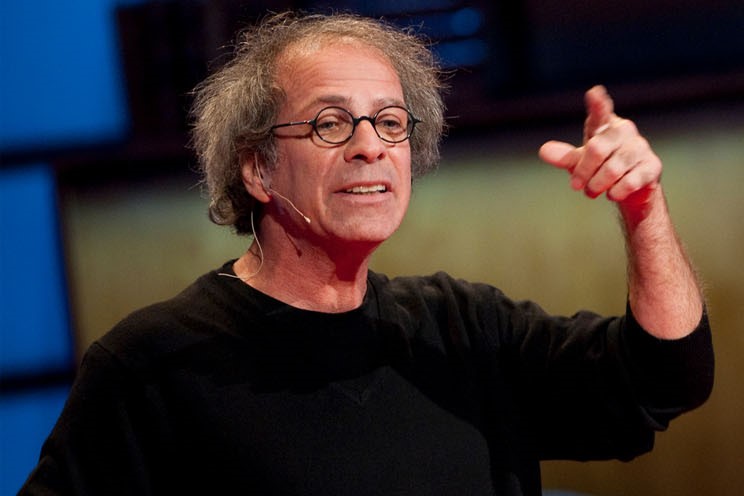
Today, my guest is Itay Talgam, a protégé and disciple of the great Leonard Bernstein, who has conducted many prominent orchestras and ensembles worldwide, including the Orchestre de Paris, the St Petersburg Philharmonic, the Israel Philharmonic and the Leipzig Opera House.
Today, he is a leadership consultant and keynote speaker who finds metaphors for organisational behaviour — and models for inspired leadership — within the workings of the symphony orchestra. His 2009 TED Talk, Lead Like the Great Conductors, has been viewed over 4 million times. Imagining music as a model for all spheres of human creativity, Talgam created the Maestro Program of seminars and workshops. A native of Tel-Aviv, Talgam received his Artist Diploma in conducting from the Jerusalem Rubin Academy. He then studied in France, Italy, and the US. He is also a graduate of General Philosophy studies at the Hebrew University of Jerusalem.
In this candid conversation, Itay shared the real stories behind his transition from conductor to leadership speaker, the hidden power of conversational gaps, and why he ultimately left the podium to focus on people.
1. The Biking Maestro. Itay admitted that he didn’t invent the conductor-as-leader metaphor, but rather fell into speaking when asked to address a group of senior bank managers who supposedly had zero interest in classical music. Arriving to the talk on his bicycle and seeing their expensive black Mercedes in the parking lot, he initially felt culturally superior, but was completely surprised when the bankers proved incredibly adept at analyzing the complex body language and relationships in the conducting videos he showed them.
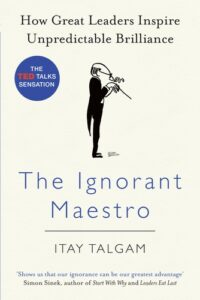
2. The Power of the Gap. In his book The Ignorant Maestro, Itay explores the profound concept of “gaps” in conversations and organizations. While most people fearfully shy away from the silent “voids” where they don’t know what to do, he argues that actively defining these gaps and acknowledging the different perspectives of those involved creates the ultimate opportunity for new ideas and true learning to emerge.
3. The Leonard Bernstein Dilemma. As a former student of the highly liberal and collaborative Leonard Bernstein, Itay learned a harsh lesson about cultural gaps when conducting a Tel Aviv orchestra comprised mostly of Soviet immigrants. When a rehearsal was going poorly, he democratically stopped and asked the musicians what he was doing wrong; instead of feeling respected by his inclusivity, the musicians were deeply insulted, with the eldest bluntly informing him that a true conductor shouldn’t have to ask what to do because he should already know.
4. The True Role of the Conductor. Surprisingly, Itay believes that being an instrumental performer is actually much more difficult than being a conductor. He explained that a conductor’s real job isn’t necessarily understanding Mozart better than the first violinist, but rather acting as a medium who possesses the endless willpower needed to constantly combat an orchestra’s natural routine, fatigue, and boredom. Ultimately, he transitioned away from full-time conducting to focus on speaking because he realized he was far more interested in building relationships with people than simply creating the best musical product.
