Guy Spier, Hedge Fund Manager and Value Investor

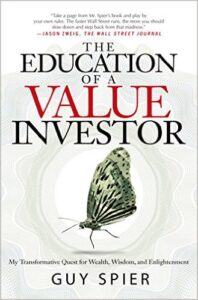
Today, my repeat guest is Guy Spier, a Zurich-based value investor and author of The Education of a Value Investor, whom I have now interviewed twice.
Guy manages the Aquamarine Fund, an investment partnership inspired by, and styled after Warren Buffett's 1950s investment partnerships. In June 2007, Guy paid US$650,100 with Mohnish Pabrai for a charity lunch with Warren Buffett.

Guy previously worked as an investment banker in New York and as a management consultant in London and Paris. He has an MBA from the Harvard Business School and holds a First Class degree in Politics, Philosophy and Economics from Oxford University. On graduating from Oxford, he was co- awarded the George Webb Medley prize for the best performance that year in economics.
In this candid conversation, Guy shared the real stories behind the unintended consequences of his deeply personal book, his evolving views on value investing, and the truth about what actually creates success beyond an elite education.
1. The Loss of Innocence. Guy discussed his highly successful book, The Education of a Value Investor, noting that he revealed his life in such "garish and lurid detail" that he essentially lost his personal privacy. He compared publishing such a deeply self-revelatory book to losing one's virginity—something you might yearn for, but which ultimately leaves you regretting your lost innocence once it is gone. Having experienced the repetitive shallowness of being a "minor celebrity," he now actively avoids situations where people only want to meet the cardboard copy of his public persona.
2. The Evolving Investor. Sharing a lesson from a wise rabbi, Guy emphasized that changing your mind is a good thing because it simply means you are growing and alive. He admitted to changing several core investing views since his book was published. For instance, he previously refused to meet with corporate management out of fear of being duped, but now realizes their inside information is invaluable if handled carefully. Furthermore, he used to keep all his investment ideas strictly secret, but now actively shares them in public to put the algorithm to work and attract new resources, smart connections, and critical feedback.
3. The Norman Rockwell Portfolio. When comparing himself to his idol Warren Buffett, Guy noted that Buffett comfortably operates with permanent capital and prefers a "Norman Rockwell style" of investing heavily in traditional American businesses. In contrast, Guy is highly willing to look for opportunities beyond America's borders in frontier markets, as well as in smaller sub-billion-dollar companies that simply wouldn't move the needle for Berkshire Hathaway. He also shared how Buffett's massive investment in Apple finally forced him to break his own stubborn rule of avoiding technology companies, making him realize that durable economic moats can exist in any industry.
4. The Illusion of Elite Education. Reflecting on his early career, Guy admitted that graduating from Oxford and Harvard Business School left him with a highly arrogant, snarky attitude, believing he could substitute actual hard work with sheer "verbal agility". After nearly ruining his pristine resume by working at a shady brokerage firm, it took him the best part of a decade to dig himself out of the hole. Through that humbling process, he realized that true success actually stems from basic fundamentals, like meeting human needs and building goodwill. He now passionately shares this message to empower those without elite degrees and to actively discourage society from blindly bowing down to Ivy League graduates
