
Daniel Pink, NY Times Best-Selling Author
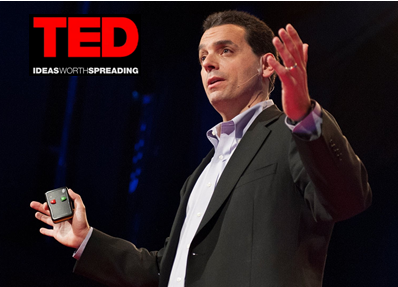
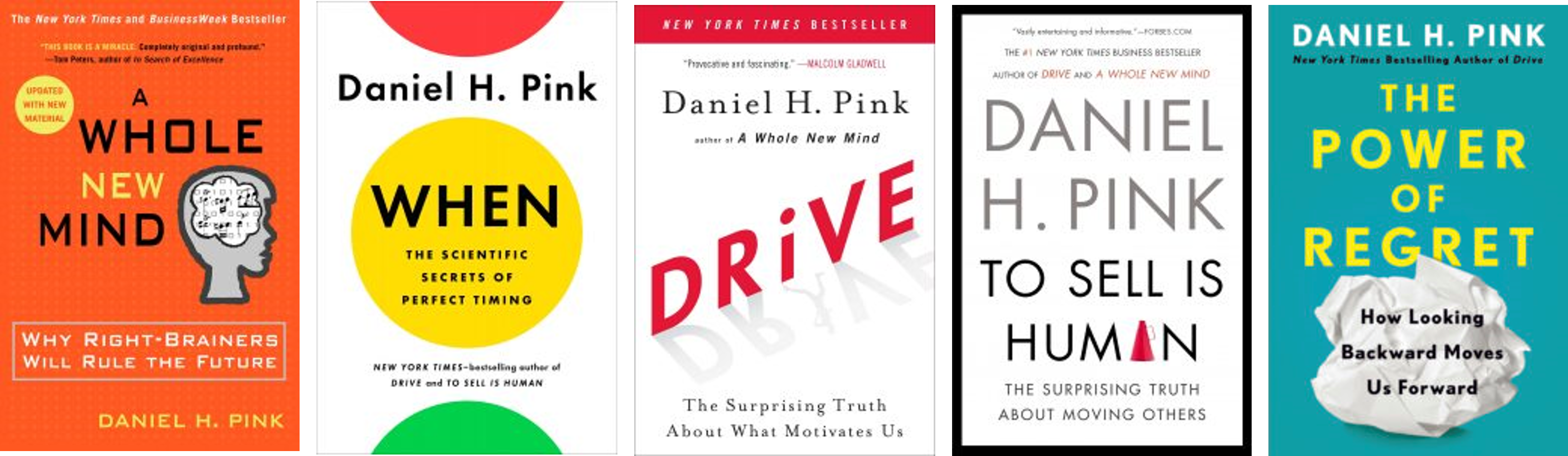
Today, my guest is Daniel Pink, who is the author of five New York Times bestsellers, including his latest, The Power of Regret: How Looking Backward Moves Us Forward. His other books include the New York Times bestsellers When and A Whole New Mind — as well as the #1 New York Times bestsellers Drive and To Sell is Human. Dan’s books have won multiple awards, have been translated into 42 languages, and have sold millions of copies around the world.
Dan was host and co-executive producer of “Crowd Control,” a television series about human behavior on the National Geographic Channel that aired in more than 100 countries. He hosts a popular MasterClass on sales and persuasion. He has appeared frequently on NPR, PBS, ABC, CNN, and other TV and radio networks in the US and abroad. Dan received a BA from Northwestern University, where he was a Truman Scholar and was elected to Phi Beta Kappa, and a JD from Yale Law School.
In this candid conversation, Dan shared his insights on the permanence of remote work, the surprising science behind our biggest regrets, and his fascination with the future of artificial intelligence.
1. The Permanence of Hybrid Work. Dan revealed that after predicting the rise of remote work 20 years ago, the pandemic finally forced millions to figure it out in just a few days. He believes the workplace is now shifting toward a "permanent hybrid" model, predicting that society will eventually drop the "hybrid" label altogether and just call it "work," similar to how a mix of cooking, ordering takeout, and dining out is simply referred to as having dinner.
2. Reclaiming Regret. Discussing his book The Power of Regret, Dan explained that popular culture wrongly stigmatizes the emotion by telling people to "be positive" and never look back. Using his own personal regret over failing to speak up when people were being mistreated or excluded, he argued that instead of ignoring regret or wallowing in it, we should use the painful emotion as valuable data and a propulsive force to clarify what we genuinely care about and instruct us on how to act better in the future.
3. The Gap of Inaction. Drawing on a massive global survey of over 23,000 people across 109 countries, Dan uncovered a striking demographic shift regarding what haunts us. While people in their twenties have equal numbers of regrets about things they did and things they didn't do, older adults regret their inactions at a staggering two-to-one or three-to-one ratio. He notes this is largely because action regrets—like getting a bad tattoo or hurting someone—can often be fixed or undone, whereas inaction is metaphysically impossible to reverse.
4. The Next Evolution of Creation. Looking toward the future, Dan is intensely fascinated by the rapid rise of generative AI. He compares the current skepticism around AI art and writing to the historical pushback against the introduction of photography, electric typewriters, and early spell-check programs, noting that while people initially view these disruptive tools as "cheating," they ultimately redefine our foundational notions of creation. He even jokingly hopes that generative AI will simply write his next book for him while he sits back in a smoking jacket issuing prompts.
