
Dan Lieberman, Evolutionary Biologist at Harvard
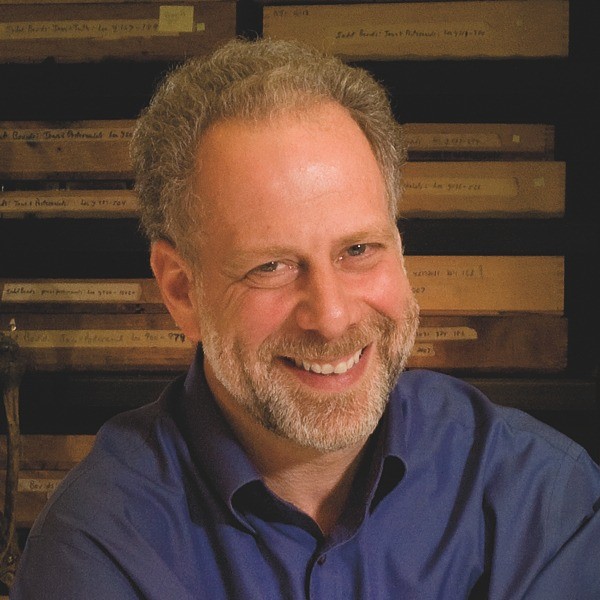
Today, my guest is Dan Lieberman, a paleoanthropologist at Harvard University, where he is the Edwin M Lerner II Professor of Biological Sciences, and Chair of the the Department of Human Evolutionary Biology. Prior to joining Harvard in 2001, he taught at Rutgers University and the George Washington University. Dan’s research centers on why does the human body look and function the way it does and his view is that it requires an evolutionary perspective because nothing in biology makes sense except in the light of evolution.

As Dan puts it, “an evolutionary approach to human anatomy and physiology not only helps us to understand better why humans are the way they are, but also helps provide key insights on how to prevent many kinds of illnesses and injuries.”
Dan is the Director of the Skeletal Biology Laboratory at Harvard, on the curatorial board of the Peabody Museum of Archaeology and Ethnology, a member of the Department of Organismic and Evolutionary Biology at Harvard, and the Scientific Executive Committee of the The Leakey Foundation. Dan received his BA, MA and PhD all from Harvard University as well as an M.Phil from Cambridge University.
In this candid conversation, Dan shared the real stories behind his accidental path to evolutionary biology, the misunderstood barefoot running craze, and the evolutionary truth about why humans naturally hate to exercise.
1. An Accidental Biologist. Dan revealed that he originally went to Harvard completely certain he would become a geologist, but an unbelievably boring mineralogy class pushed him to try a freshman seminar on human evolution instead. While he initially focused on studying fossil skulls, his research eventually shifted because he realized that 99.9% of people don’t actually care about “who begat whom” in the ancient fossil record. Instead, he found profound purpose in using evolutionary theory to understand modern human health, recognizing that we cannot solve modern chronic diseases without understanding how our bodies originally evolved.
2. The “Barefoot Jeffrey” Epiphany. Dan’s massive foray into barefoot running research actually began when a self-admitted Harvard dropout from the Timothy Leary days, who introduced himself as “Barefoot Jeffrey,” attended one of Dan’s lectures. Jeffrey later showed up to Dan’s lab wearing a striped Victorian bathing suit and demonstrated a flawless, low-impact running stride that didn’t aggressively jiggle his head. While this encounter led to Dan’s groundbreaking Nature papers on foot biomechanics, he was deeply frustrated when the media highly polarized his findings. He noted that the press falsely painted him as an anti-shoe “evangelist,” completely ignoring his true biological perspective that all footwear choices inherently come with evolutionary trade-offs.
3. The Myth of the Lazy Human. When asked for the ultimate truth about exercise, Dan explained that it is completely biologically normal to hate working out because humans never actually evolved to “exercise”. He defines exercise as discretionary, pointless physical activity; for an ancient hunter-gatherer struggling to survive, intentionally wasting 500 calories on a morning run would have been an incredibly stupid waste of energy. Because our ancestors only evolved to move when it was strictly necessary or highly rewarding, Dan strongly insists that we must stop blaming and shaming people for naturally dreading the gym.
4. The Coffee Spill of Aging. Even though we didn’t evolve to exercise, Dan stressed that movement is still absolutely critical as we age because it triggers the body’s natural maintenance systems. He compared physical activity to spilling coffee on a floor: the exercise inherently causes biological damage and stress to the body, but our repair mechanisms deliberately overcompensate to clean up the mess, ultimately leaving the “floor” cleaner and stronger than it was before. Driven by this desire to help people age better, he is currently applying his evolutionary lens to a new “anti-BS” book about the complex evolution of human food and diet.
