
Daniel Goleman, Author of “Emotional Intelligence”
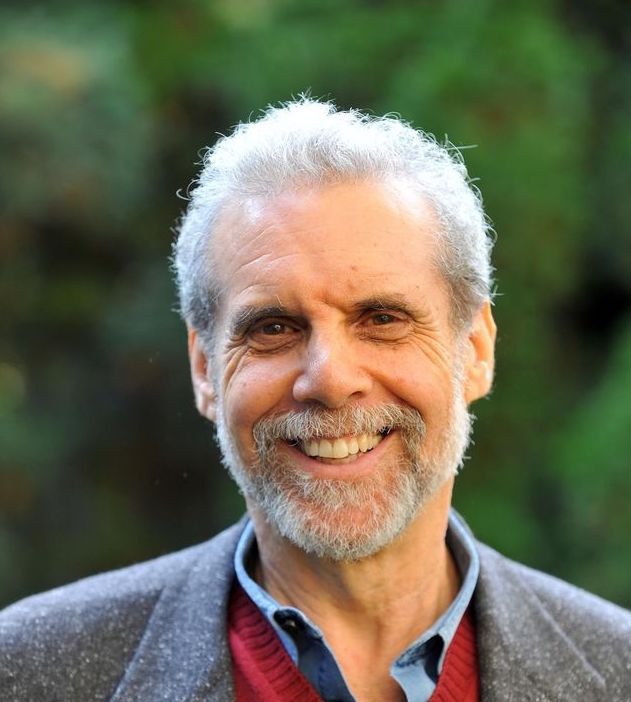
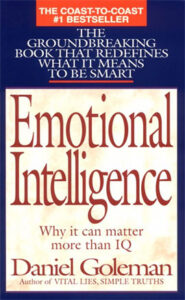
Today, my guest is Daniel Goleman, an internationally known psychologist who lectures frequently to professional groups, business audiences, and on college campuses. As a science journalist, Daniel reported on the brain and behavioral sciences for The New York Times for many years. His 1995 book, Emotional Intelligence was on The New York Times bestseller list for a year-and-a-half, with more than 5,000,000 copies in print worldwide in 40 languages, and has been a best seller in many countries.
Apart from his books on emotional intelligence, Daniel has written books on topics including self-deception, creativity, transparency, meditation, social and emotional learning, ecoliteracy and the ecological crisis. Daniel is a co-founder of the Collaborative for Academic, Social, and Emotional Learning, originally at the Yale Child Studies Center and now at the University of Illinois at Chicago. Daniel’s work as a science journalist has been recognized with many awards, including the Washburn Award for science journalism, a Lifetime Career Award from the American Psychological Association, and he was made a Fellow of the American Association for the Advancement of Science in recognition of his communicating science to the general public. Daniel holds a Ph.D. from Harvard University.
In this candid conversation, Daniel shared the real stories behind the unexpected global phenomenon of emotional intelligence, the vital nuances of empathy, and the profound benefits of changing our relationship with our own minds through meditation.
1. An Accidental Global Phenomenon. Daniel revealed that the concept of “emotional intelligence” originally sparked his interest while he was working as a science journalist for the New York Times. After stumbling upon an obscure academic article, he was struck by the counterintuitive idea of pairing emotion with intelligence rather than treating them as antagonists. Blending this idea with new neuroscience research, he wrote the book without ever expecting it to become a massive global bestseller that fundamentally changed both personal and business vernacular.
2. The Three Nuances of Empathy. While breaking down the core components of EQ, Daniel emphasized that empathy is not just a single trait, but actually consists of three distinct types: cognitive empathy (understanding how someone thinks), emotional empathy (feeling what they feel), and empathic concern. He notes that the third type is incredibly crucial; a narcissistic sociopath could theoretically possess the first two traits to manipulate someone, but empathic concern ensures you actually care about the other person’s well-being.
3. The Guard Dog and the Wise Owl. Advocating strongly for Social Emotional Learning (SEL) programs in schools, Daniel shared a story about a five-year-old boy who beautifully applied neuroscience to calm down from a tantrum. After suddenly stopping his fit to put on his snowsuit, the boy explained to his mother that his “guard dog” (the emotional midbrain or amygdala) had simply gotten upset, so he had his “wise owl” (the prefrontal cortex) talk to it. This demonstrates that the core ability to manage one’s inner life can be actively learned and practiced at practically any age.
4. Dropping the Train of Thought. Transitioning to his lifelong interest in meditation, Daniel explained that the practice doesn’t magically stop your thoughts, but rather fundamentally changes your relationship with them. Instead of being swept away by every negative “train” of thought that passes by, he uses simple techniques—like raising and immediately “dropping” his arms to temporarily halt his thinking—to realize he can simply observe his thoughts from a distance and let them go. He beautifully notes that a true meditation session isn’t defined by the time spent sitting on a cushion, but by the moments you are actively free from being lost in your own thoughts.
Hsu Untied interview with Daniel Goleman
