
Dan Ariely, Behavioral Economist and TED Speaker
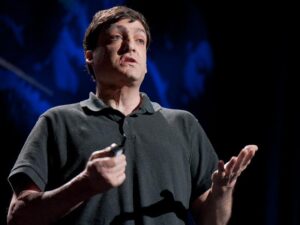
Today, my guest is Dan Ariely, Ph.D., who is a Professor of Psychology and Behavioral Economics at Duke University, founder of The Center for Advanced Hindsight and co-founder of BEworks.
Dan's research and writing lies between psychology and economics, focusing on how people behave and make decisions.
Dan's TED talks have been watched nearly 10 million times and he is the author of several best selling books including:
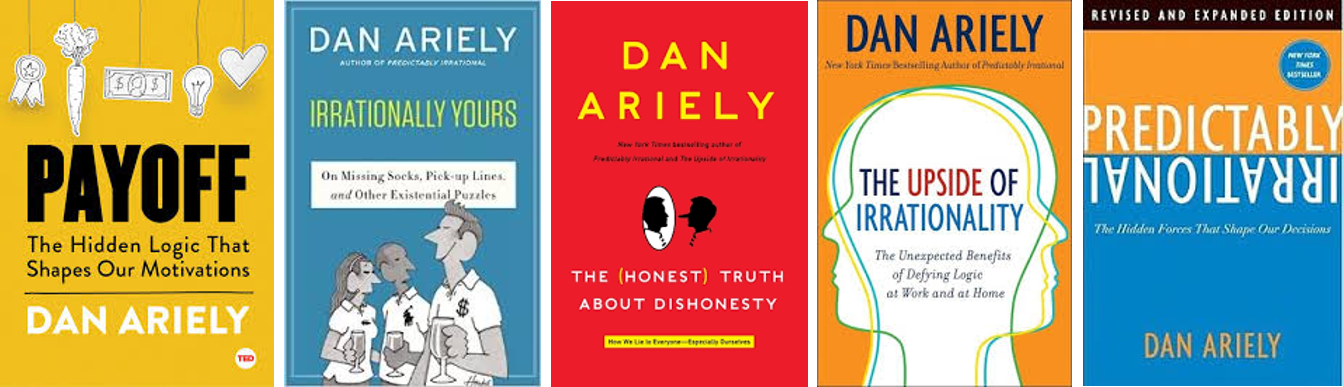
Payoff: The Hidden Logic That Shapes our Motivations; Irrationally Yours: On Missing Socks, Pick-Up Lines and Other Existential Puzzles; The Upside of Irrationality: The Unexpected Benefits of Defying Logic at Work and at Home; Predictably Irrational: The Hidden Forces That Shape Our Decisions and The Honest Truth About Dishonesty: How We Lie to Everyone – Especially Ourselves (which also became the subject of a documentary movie). It was a privilege to be able to interview Dan in person during his recent visit to Silicon Valley.
In this candid conversation, Dan shared the real stories behind his transition from a burn patient to a behavioral economist, his fascinating experiments on human irrationality, and his practical approach to solving behavioral challenges.
1. The Painful Origins of Research. Dan revealed that his interest in human behavior actually stemmed from his tragic experience of being severely burned over 70% of his body as a youth. Originally wanting to become a physician to fix the improper care he witnessed in the hospital, he pivoted to studying psychology and philosophy because his injured hands couldn't hold a scalpel or pencil. His very first experiment tested pain thresholds, surprisingly revealing that a patient's cognitive interpretation of pain—such as whether it signals recovery for an injured veteran or getting worse for a cancer patient—dramatically affects their physical tolerance to it.
2. The Power of Expectation. Questioning the unquestioned beliefs of his hospital nurses, who wrongly insisted on painfully ripping off his bandages quickly, Dan built a career testing irrational human behaviors. This led to his Ig Nobel Prize-winning research on fake medications, where he discovered that expensive placebos are far more effective at relieving pain than cheap ones. He explained that placebos work entirely on expectation, prompting the brain to automatically secrete its own natural opioids to prepare the body for the anticipated relief.
3. The Rationalization of Cheating. Dan's extensive research into dishonesty began after he caught himself looking at the answers on an in-flight Mensa test just to convince himself he was a genius. Later motivated by the Enron scandal, his famous die-rolling experiments proved that massive corporate frauds aren't usually caused by just a few "bad apples". Instead, his data showed that almost everyone has the capacity to be a little bit dishonest, and people will cheat significantly more if they can easily rationalize their behavior.
4. Making the Invisible Visible. Now focusing his research heavily on major life wastes like health and money, Dan shared a startling discovery from a savings experiment in a Kenyan slum. He found that giving poor families a physical, numbered coin to scratch each week nearly doubled their financial savings rates, vastly outperforming hefty 20% matching incentives or emotional text messages supposedly from their children. Inspired by how people historically measured wealth in visible assets like goats, he realized the physical coin successfully turned the "invisible" act of saving money into a visible, tangible action in the home.
