
Amy Gallo, Best-Selling Author and Speaker

Today, my guest is Amy Gallo, an expert in conflict, communication, and workplace dynamics. She combines the latest management research with practical advice to deliver evidence-based ideas on how to improve relationships and excel at work.
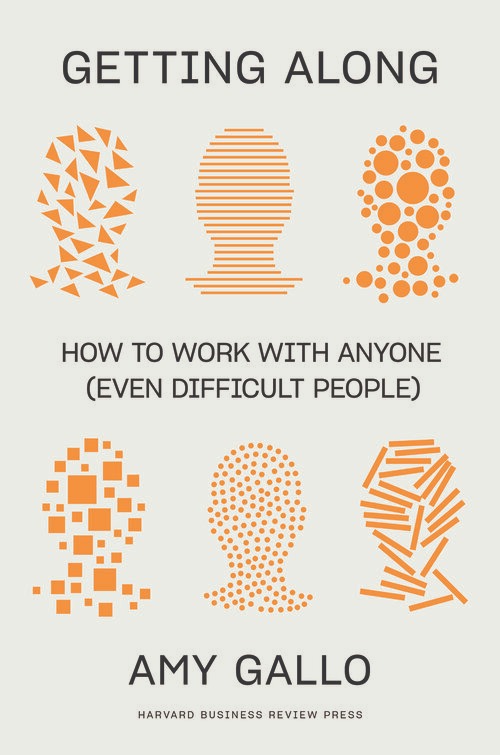
She is the author of two books: Getting Along: How to Work with Anyone (Even Difficult People) and the HBR Guide to Dealing with Conflict. Before working with Harvard Business Review, Amy was a management consultant at Katzenbach Partners, a strategy and organization firm based in New York (later acquired by Booz & Company, which is now Strategy&). Amy is on the faculty of the Emotional Intelligence Coaching Certification program, recently launched by Daniel Goleman, author of Emotional Intelligence. She has taught at Brown University and UPenn, and is a graduate of both Brown and Yale University.
In this candid conversation, Amy shared the real stories behind her transition from management consulting to focusing on workplace dynamics, the psychological traps that fuel office conflicts, and practical tactics for getting along with difficult people.
1. The Strategy Torpedo. Amy revealed that her interest in workplace dynamics actually began while she was working as a management consultant in New York. While sitting in day-long strategy meetings, she noticed that a company could have the best plan, the most talented people, and a great facilitator, but the success of the initiative ultimately depended entirely on how people communicated. Observing how a single passive-aggressive or dismissive comment could completely torpedo a conversation, she decided to focus her career on the emotional interactions behind the scenes rather than the actual business content.
2. The Trap of Naive Realism. When dealing with difficult colleagues, Amy emphasizes the need to avoid a social psychology trap called “naive realism”—the deeply flawed belief that we see situations with absolute clarity and anyone who disagrees with us is simply misinformed or wrong. She also warns against “premature cognition,” which happens when our brain feels threatened and makes a protective snap judgment about someone—like deciding a coworker is a “jerk”—and then actively collects biased evidence to endlessly confirm that negative narrative.
3. Treating Conflict as an Experiment. Because human interactions are incredibly messy, Amy strongly warns against trusting anyone who claims to have a clean, five-step process for resolving workplace conflict. Instead, she advises adopting a “scientist’s mindset” and treating difficult relationships as an ongoing experiment. By trying out different communication tactics, observing the results, and remaining genuinely curious about the other person’s behavior, professionals can prevent negative dynamics from becoming permanently cemented.
4. The Worst Medium for Disagreement. Discussing modern communication, Amy unequivocally stated that text-based mediums like Slack, email, or LinkedIn are the absolute worst places to navigate a difficult conversation due to the complete lack of non-verbal cues and emotional context. Furthermore, to combat our brain’s natural negativity bias—which causes us to lose sleep over one bad interaction while completely ignoring our successful ones—she strongly advises actively leaning into your positive friendships at work, which builds the interpersonal resilience needed to appropriately right-size the conflicts
