
Drew Dudley, WSJ Best Selling Author

In my continuing series on remote leadership, my guest today is Drew Dudley, the Founder and Chief Catalyst of Day One Leadership, who has helped top organizations around the world increase their leadership capacity.
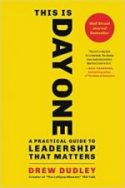
His clients have included McDonald’s, American Express, JP Morgan Chase, the United Way, and more than 100 colleges and universities. Prior to this, Drew spent eight years as the director of one of Canada’s largest leadership development programs at the University of Toronto. Drew is also the bestselling author of This is Day One: A Practical Guide to Leadership That Matters. As a speaker, Drew has delivered keynotes to more than 250,000 people across five continents. His TED talk “Everyday Leadership (The Lollipop Moment)” was voted “one of the 15 most inspirational TED talks of all time.”
In this candid conversation, Drew shared the real stories behind his philosophy of daily personal leadership, the dangers of prioritizing tasks over values, and the actionable test he uses to guarantee personal accountability.
1. The To-Be List vs. The To-Do List. Drew highlighted that highly successful people often get trapped by their own achievements; because they are constantly rewarded for getting things done, they prioritize their daily "to-do list" over their "to-be list". He argues that many leaders rationalize the massive gap between who they want to be and how they actually behave as merely temporary, constantly waiting to act on their values until a project is finished or a mortgage is paid off. He stressed that true leadership requires acknowledging this gap and executing a daily plan to close it, regardless of how busy or successful you are.
2. The Illusion of the Leadership Title. Drew strongly pushes back against treating leadership like a military rank that, once earned, is simply held forever without any requirement for daily action. Quoting a brilliant former student, he noted that it is far easier to "stand up" for an ideal than it is to actually "live up" to one. To truly live up to your ideals, he insists that core values must be strictly defined and actively used as the criteria for your decision-making in the moment, rather than just looking back at the end of the day to retroactively justify your actions.
3. The Daily Leadership Test. To operationalize these values, Drew created a "leadership test" rooted in six core values: impact, growth, courage, empowerment, class, and self-respect. He challenges leaders to imagine having to prove they deserve another day on this planet every single night by answering a specific question tied to each value, such as asking what they did to recognize someone else's leadership or what they tried that might not work. He strives to pass the test by living out at least three of the six values daily, ensuring that even if he isn't in control of his daily tasks, he remains fully in charge of who he is.
4. Redefining High Performers. When discussing common leadership flaws, Drew noted that modern education and corporate systems falsely train people to compete for scarce resources by trying to outperform ninety percent of the room. Instead, he argues that organizations must stop blindly rewarding toxic top earners and instead heavily reward the indispensable employees who actively make everyone around them better. He also highlighted research showing that when employees are clear on their own personal values—rather than just the company's values—they are significantly happier, more productive, and less likely to quit.
