
SXSW Podcast: “Beyond Numbers: Why Decision-Making Belongs in the Math Classroom”
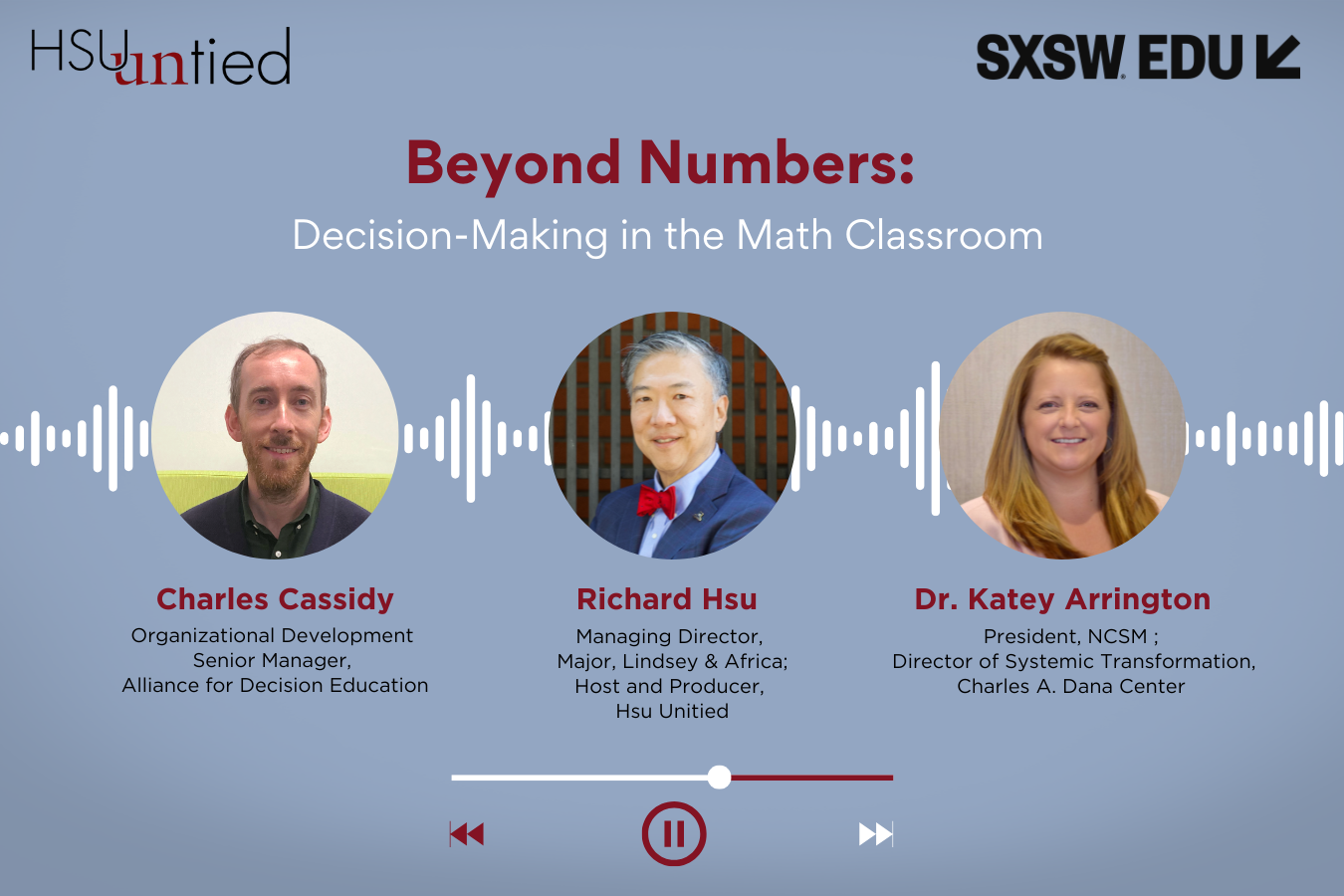
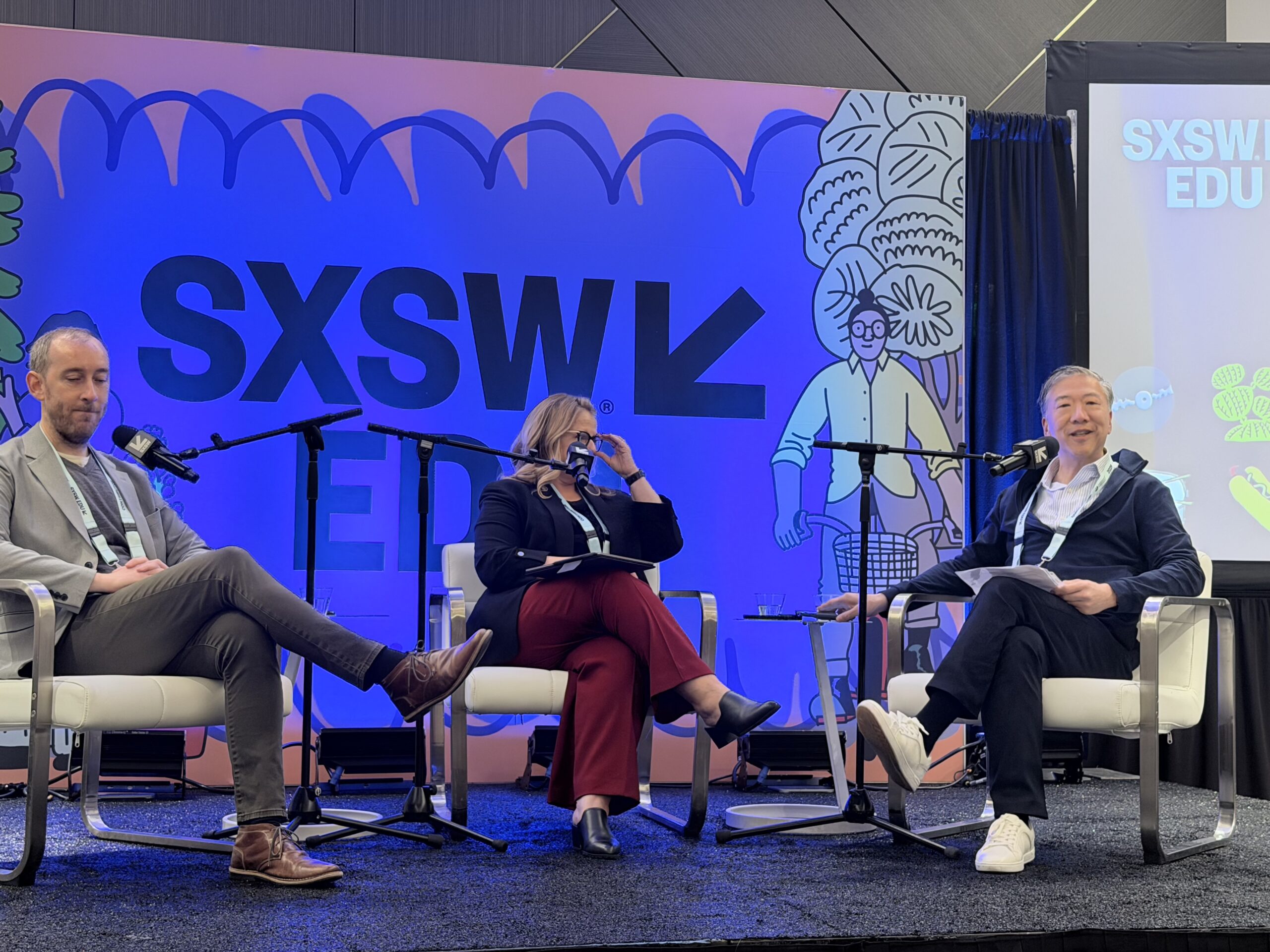
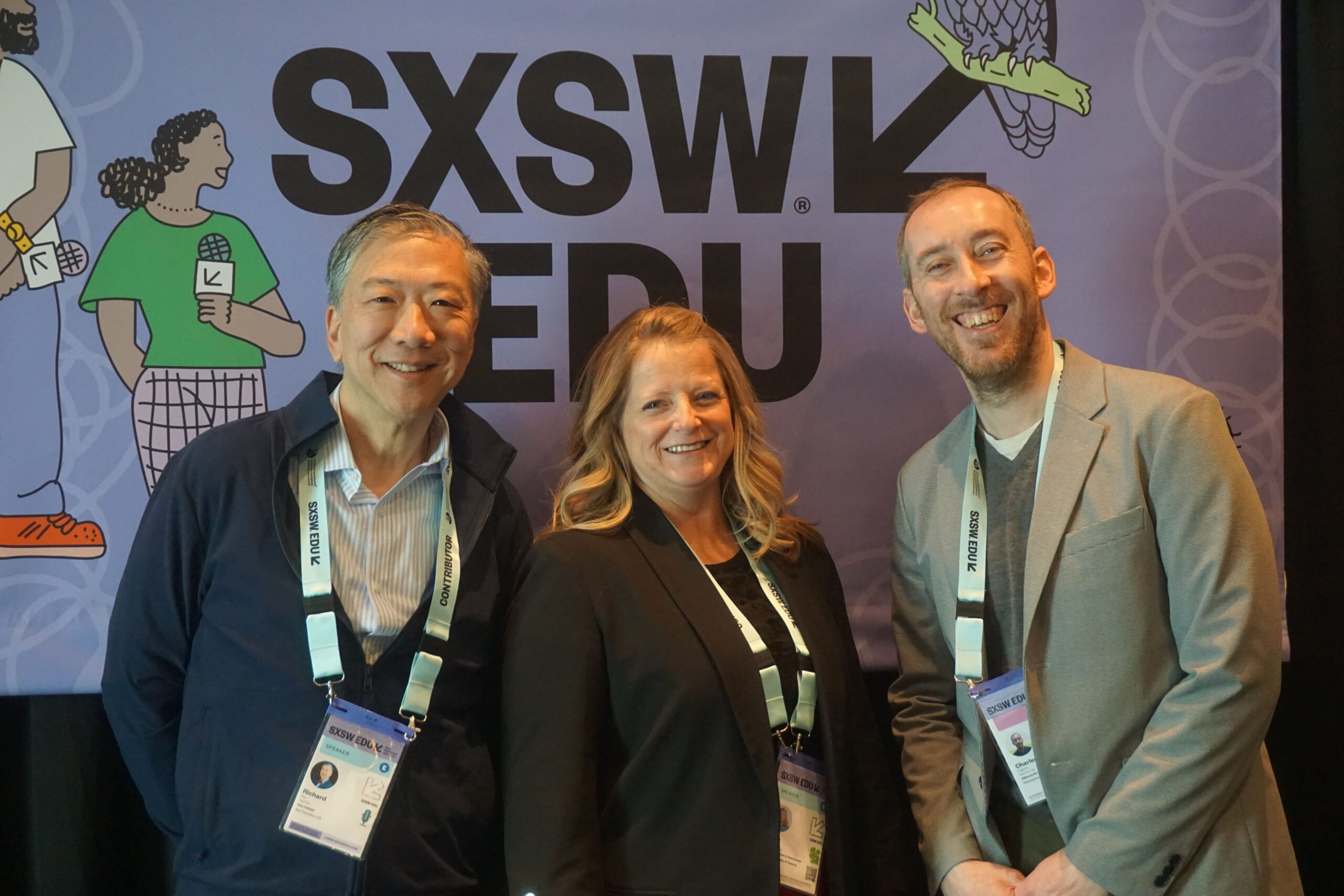
Today, I hosted a SXSW panel titled "Beyond Numbers: Decision Making in the Math Classroom" featuring Dr. Katie Arrington from the Charles Dana Center at UT Austin and Charles Cassidy from the Alliance for Decision Education. Together, they made a compelling case that mathematics is far more than mere computation; it is a vital toolkit for modeling the real world and making better life choices.
Here are the key takeaways from their thought-provoking discussion:
The Case for "Decision Education" in Math. Cassidy pointed out that a person's life outcomes are primarily driven by two things: luck and the quality of their decisions. Since we can't teach luck, instructing students on how to make sound decisions is a transformative opportunity.
But why put this in a math class instead of its own subject? Practically, schools simply do not have the time to carve out an entirely new class block. More importantly, math and decision-making are a natural pairing. Mathematical tools like probability were originally developed hundreds of years ago precisely to help humans navigate uncertainty and weigh risks. As Dr. Arrington noted, quoting mathematician John Allen Paulos, "Mathematics is no more computation than literature is typing".
From "Solve for X" to "Choose and Justify" To embed decision education into math, educators must shift away from merely asking students to calculate a single answer, and instead empower them to choose between options and justify their reasoning.
Dr. Arrington gave a perfect example: Instead of a traditional, rigid word problem asking how many 40-seat buses are needed to transport 260 students, a teacher could tell the class, "You are the principal trying to transport 300 kids. How will you get them there?". This open-ended approach forces students to research transportation types, compare varying costs and capacities, weigh the risks, and present legitimately different solutions.
Another practical application is having students look at school survey data—like opinions on a cell phone ban—and asking them to recommend a policy. To do this well, students must use statistical thinking to spot the limitations of the data, such as a flawed sample size, before making their decision.
The Surprising Power of Estimation. In an era where smartphones and AI can execute complex calculations instantly, both panelists fiercely agreed that estimation is becoming one of the most vital math skills a student can learn.
If a student asks an AI or a calculator a question, they must possess the mathematical reasoning to know if the machine's answer is actually reasonable. Cassidy emphasized that understanding whether a real-world probability is closer to 10% or 90% is significantly more useful for life decisions than knowing how to calculate the exact difference between 83% and 84%.
Empowering Students and Overcoming Resistance Teachers initially push back against this teaching style because it breaks from how they were taught and makes grading messy. Without a single "right" answer, teachers face the pressure of evaluating multiple valid approaches.
However, the payoff in student engagement is massive. Dr. Arrington shared a story of a 10th-grade teacher who initially feared that real-world modeling was too difficult for his struggling math students. After finally trying it, he realized he had actually been asking too little of his students. Giving them relevant tasks that required decision-making deeply engaged them.
Students ultimately love this approach. They are thrilled by the opportunity to debate and justify why their solution is better than a classmate's. Furthermore, learning about "cognitive biases" (predictable thinking traps our brains fall into) gives students a powerful new vocabulary, and they take great joy in catching their friends and parents falling into those traps!
How to Get Started. The panelists agreed that it is never too early to start integrating these concepts, from simple fraction estimation games in early grades to complex data analysis in high school.
For educators who feel overwhelmed but want to try integrating Decision Eduction into their math classrooms, there is help available. The Alliance for Decision Education has free resources and other ways to get involved listed on their website.
