Cassie Holmes, Author of “Happier Hour”
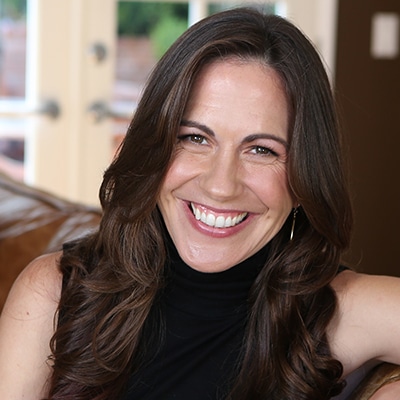
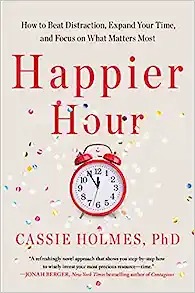
Today, my guest is Cassie Holmes, a Professor at UCLA’s Anderson School of Management, an award-winning teacher and researcher on time and happiness, and bestselling author of Happier Hour: How to Beat Distraction, Expand Your Time, and Focus on What Matters Most.
Cassie’s research examines such questions as how focusing on time (rather than money) increases happiness, how the meaning of happiness changes over the course of one’s lifetime, and how much happiness people enjoy from extraordinary versus ordinary experiences. Cassie developed and teaches the course Applying the Science of Happiness to Life Design, which helps students thrive in their personal and professional lives and has become one of UCLA’s most popular courses among MBAs and Executive MBAs alike. Cassie has a Ph.D. from Stanford University’s Graduate School of Business, and a B.A. from Columbia University.
In this candid conversation, Cassie shared the real science behind happiness, the surprising relationship between time and fulfillment, and actionable strategies to make the most of our daily hours.
1. The Upside-Down U-Shape of Time. Cassie revealed that as a happiness researcher, she initially struggled deeply with feeling “time poor,” constantly rushing between meetings and feeling chronically stressed while trying to get home to her family. She strongly considered quitting her job, assuming that having boundless free time would be the ultimate key to happiness. However, her analysis of the American Time Use Survey revealed a surprising upside-down U-shape curve: while having too little time makes people stressed, having too much discretionary time (more than roughly five hours a day) actually makes people significantly less happy because humans are naturally averse to being idle and need a sense of purpose. Ultimately, true fulfillment isn’t about having endlessly more time, but about wisely investing the hours you already have.
2. The Truth in Time Tracking. To help people figure out what actually brings them joy, Cassie highly recommends meticulous “time tracking” over the course of an entire week. By actively recording each specific activity and rating the resulting emotional satisfaction on a 10-point scale, people often discover their assumptions about their own happiness are completely wrong. She shared the story of an MBA student who realized he didn’t actually enjoy watching TV after the first hour, but surprisingly gave his most dreaded activities—like exercising and socializing—nines and tens on the happiness scale. Gathering this hard personal data allows people to effectively reclaim wasted hours and rationally reallocate them toward truly worthwhile pursuits.
3. Fighting Hedonic Adaptation. Cassie stressed that happiness relies entirely on the quality of time rather than the quantity, noting that humans are mentally distracted almost 47% of the time, which severely limits our joy. To combat this, she advocates creating strict “no phone zones” to force complete engagement, especially during profoundly ordinary moments. Because humans naturally get used to routine joys—a psychological trap called hedonic adaptation—she actively counters this by counting her “times left”. For instance, by calculating that she only has about 36 weekly coffee dates left with her seven-year-old daughter before the child inevitably outgrows the tradition, the mathematical reality forces Cassie to treat that brief 30 minutes as incredibly precious and fully block out all mental distractions.
4. The Vacation Mindset. Acknowledging that not everyone excels at traditional mindfulness techniques like meditation to stay present, Cassie offered a brilliant, simple alternative to break out of the exhausting “doing mode”. She conducted an experiment where some participants were explicitly instructed to treat their upcoming regular weekend exactly like a “vacation”. On Monday, those who simply adopted this vacation mindset were significantly happier and enjoyed their weekend far more than the control group, even though they spent their time doing the exact same activities. By intentionally shifting into a relaxed “being mode,” we can actively train our minds to be deeply present and extract significantly more joy from our everyday lives.
